Two ships, one storm
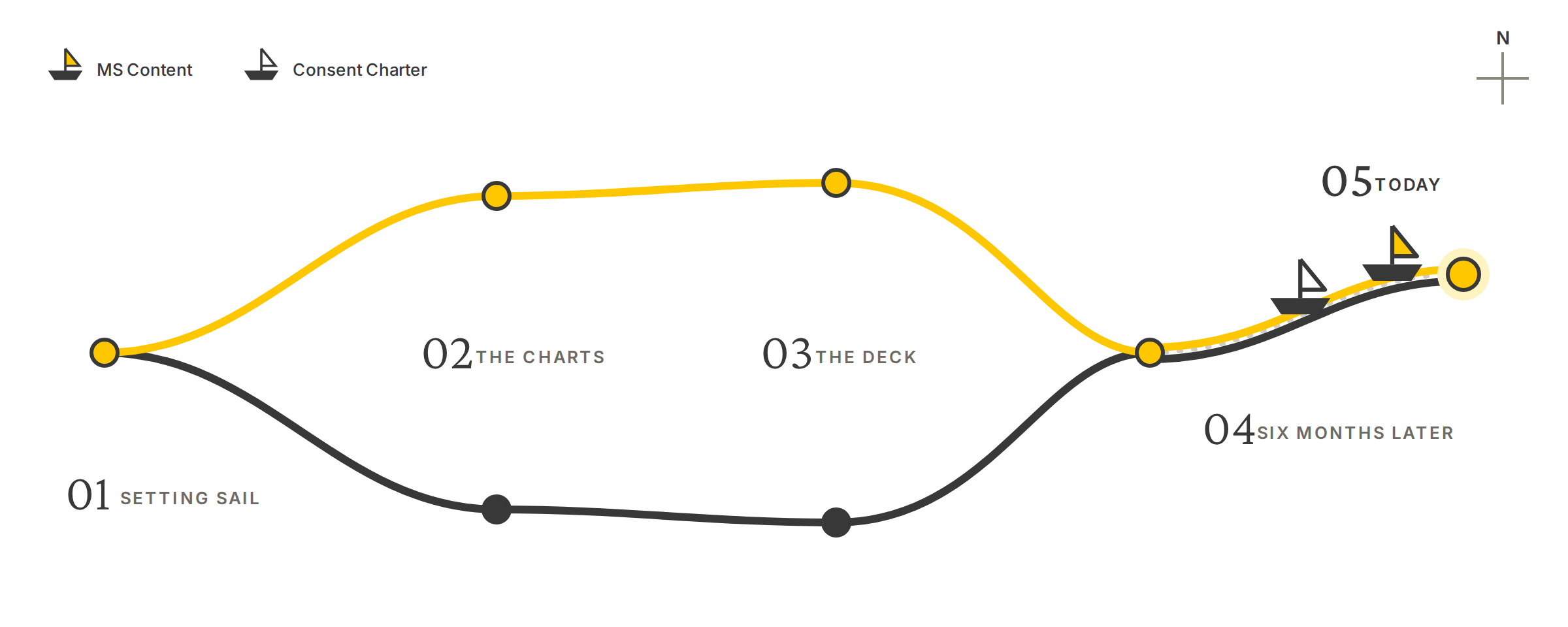
Every crew believes its storm is unique. It rarely is. The MS Content and the Consent Charter left port in the same weather and found two different ways through it.
This voyage is a composite of several engagements across energy, media and manufacturing. Names, numbers and details are blended, the patterns are real.
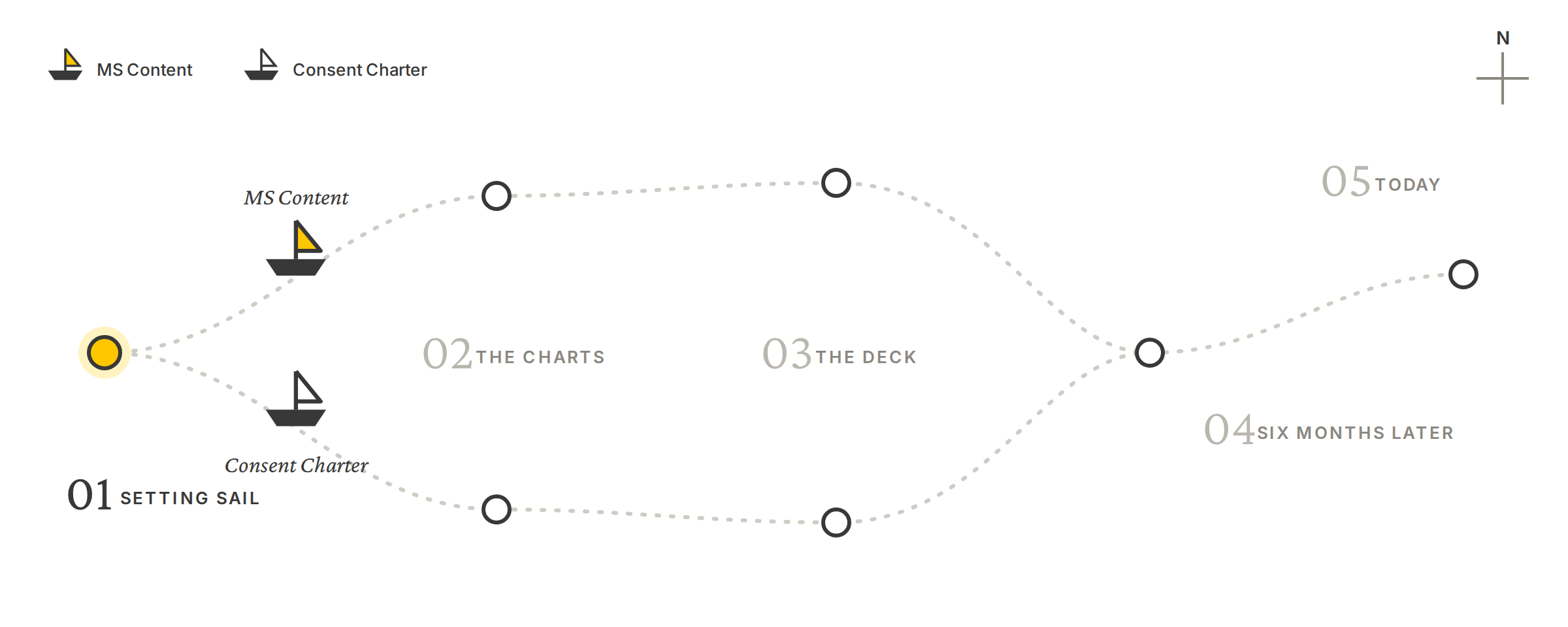
Agile on paper.
Something else at sea.
Two teams, a shared platform, and backlogs that took more time to maintain than the work they organised. Refinements ran long, plannings ended incomplete, priorities shifted weekly, sometimes daily, and nobody knew when anything would land.
On both ships, chaos ruled. Not because the crews were bad, but because the framework didn’t fit the voyage.
Why? → A Masquerade
One backlog, many cargoes.
Both backlogs were built for one product, one goal and one delivery.
Instead, each backlog carried several products at once. Every voyage took longer than it should and left waste in its wake. The backlog itself was the chaos, and it needed structure before anything else could change.
How? → Simple Complexity
In practice, stories from different products queued up in one list and fought for the same sprint. Refinement jumped from one product to the next, the sprint goal turned into a list of goals, and the order was set by whoever pushed hardest that week.
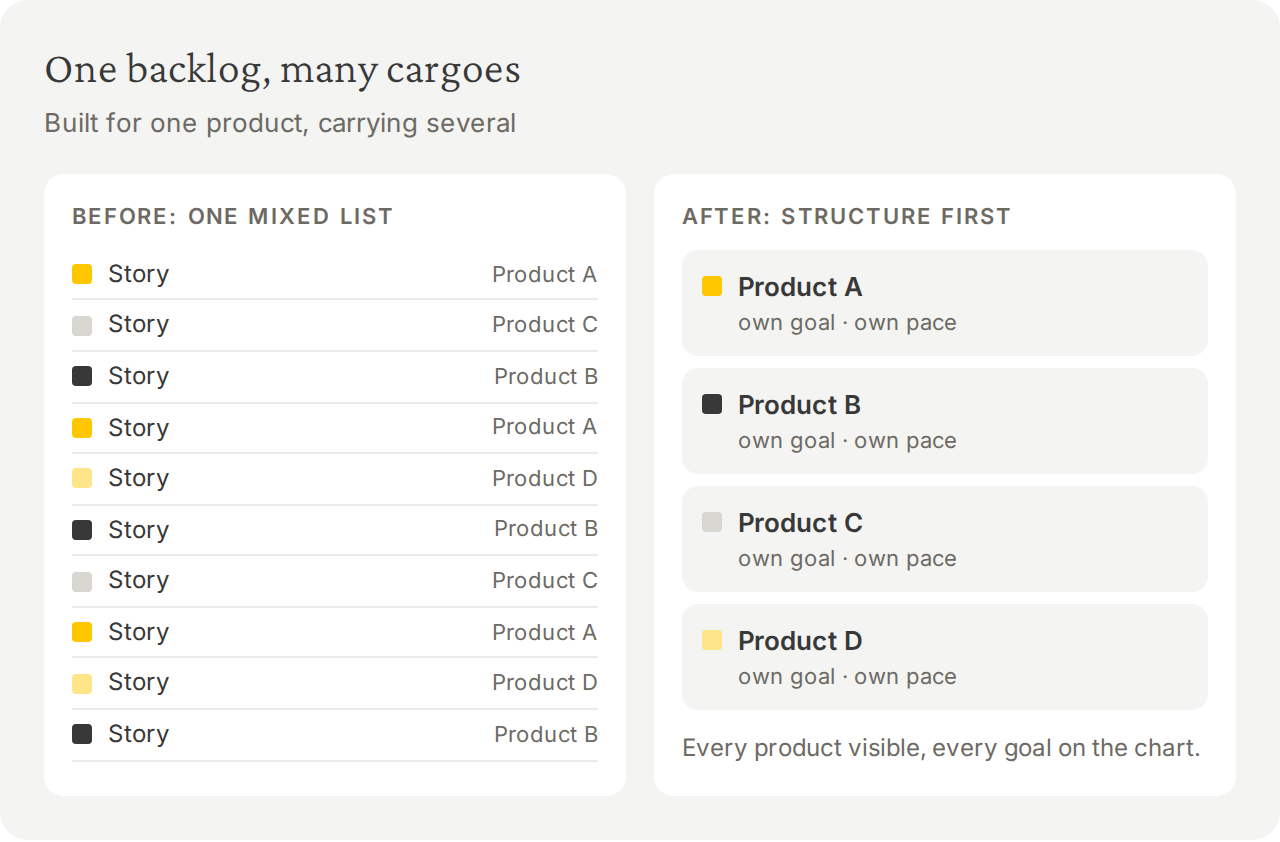
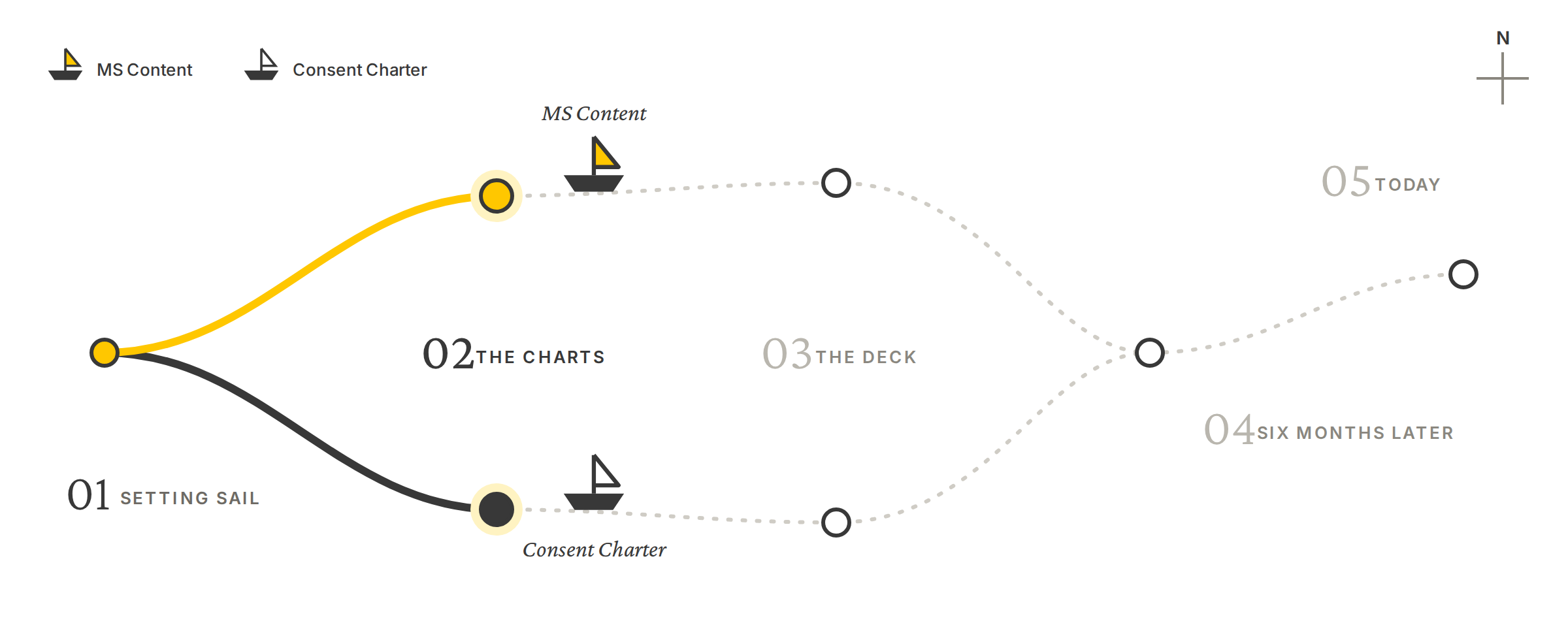
So we started with the backlog, not the framework. Every product got its own place, its own goal and its own pace.
Only then could the crews see what they were actually carrying.
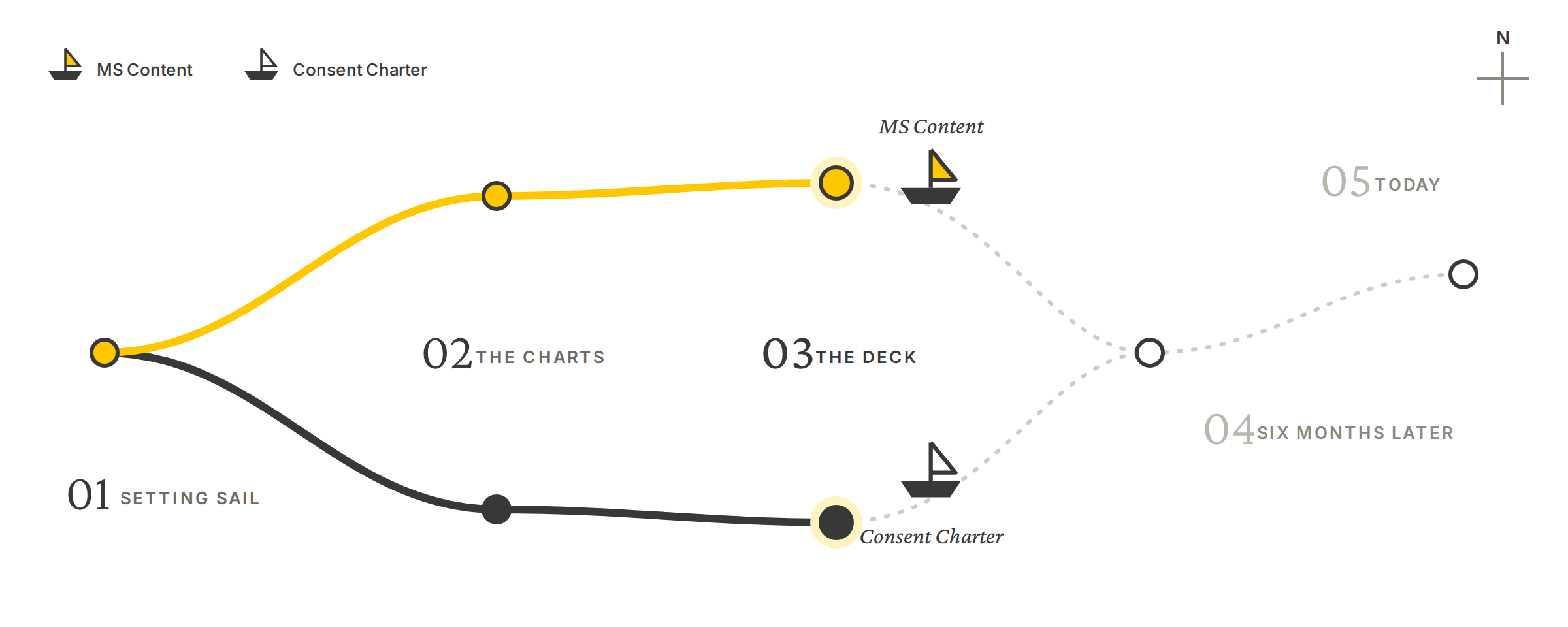
There is no standard deck.
Most teams start by copying a structure: a template from another department, the tool's default, or the hierarchy a framework recommends. On paper, that looks like order. In practice, it only moves the chaos into neater boxes. A deck has to carry the ship's actual cargo: how many products, how big the themes, how much depends on others.
So before changing anything, we asked each crew the same questions. What are you carrying? What has to arrive, and by when? What does it depend on? The answers looked nothing alike, and neither did the decks we built.
How? → The Red Line
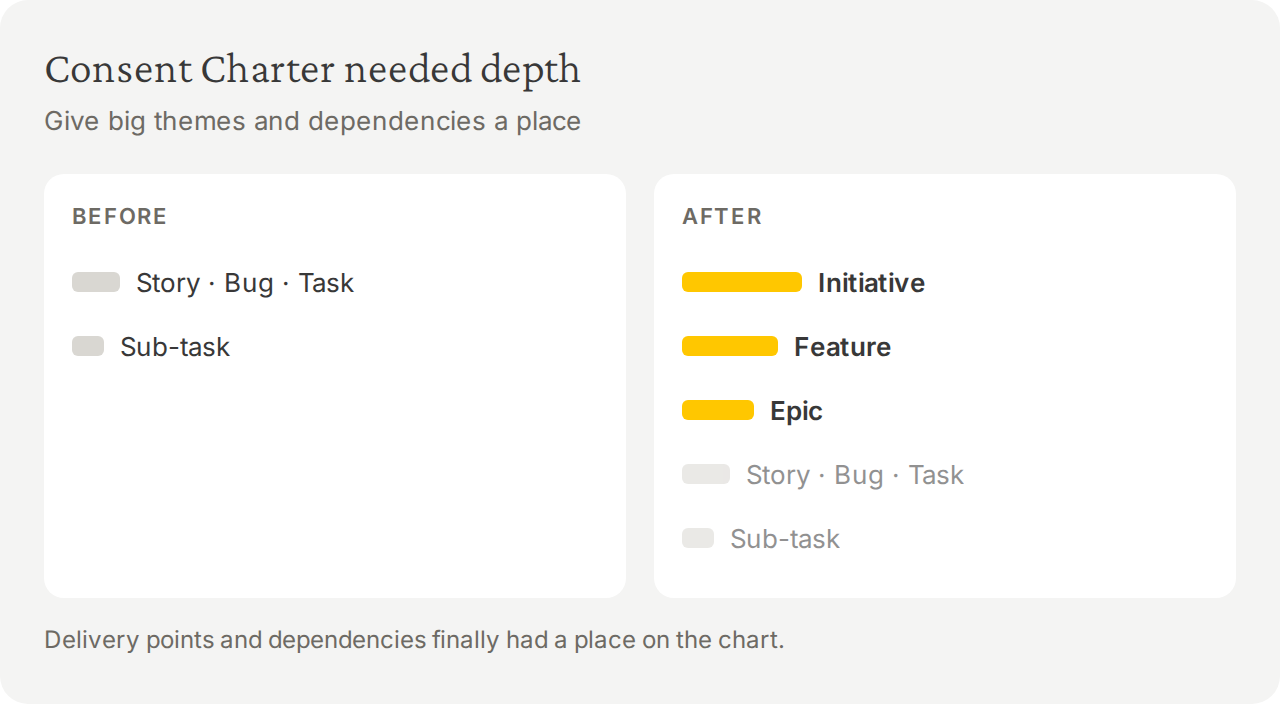
The Consent Charter needed depth. Stories, bugs and tasks were there, but big themes, deliverables and their dependencies had nowhere to live. Everything was squeezed into the same two levels. We added initiatives, features and epics above them, so every delivery point had its place and every dependency a line on the chart.
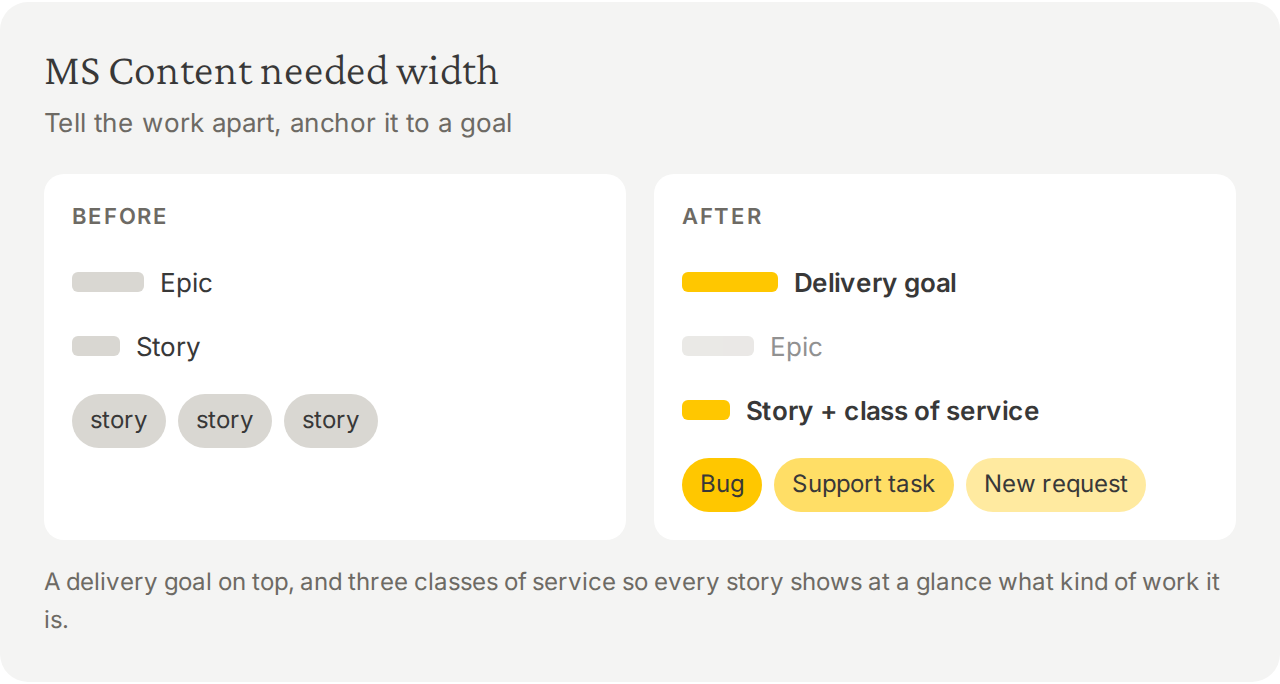
The MS Content needed width. Its backlog had only epics and stories, and every story looked the same: a bug, a support task and a new request all fought for the same attention. We added a delivery goal on top, so every piece of work had an anchor, and classes of service at story level. From then on, the crew saw at a glance what kind of work was in front of them, and could decide how to treat it.
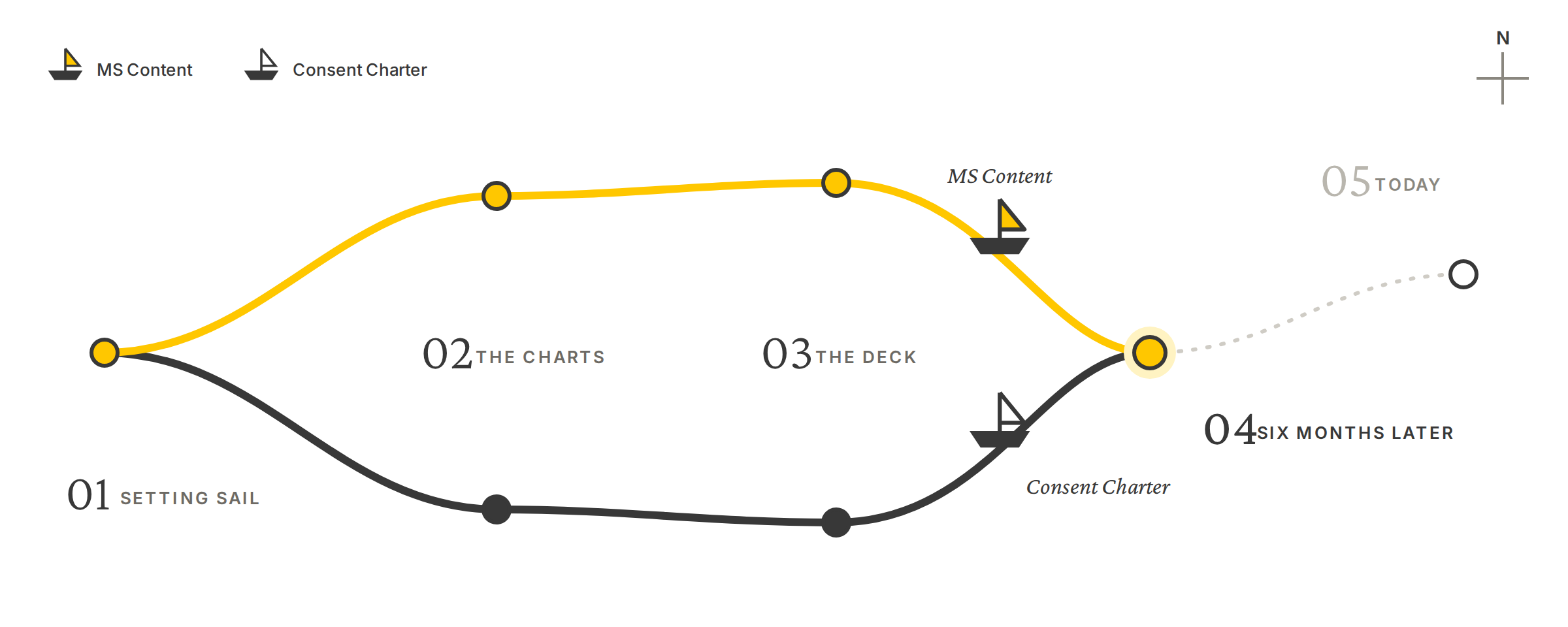
The crews sail together again.
The crews depended on each other, yet each planned on its own. Separate plannings cost more time and still ended in delivery problems. When something slipped, the search for whose fault it was began: blame games, responsibility bingo, and a little more silo thinking every sprint.
So we merged planning and dissolved the silos. Both crews refined the delivery goals together and broke them down into stories and classes of service side by side. Dependencies stopped being something a team could argue away. They were on the table, in front of everyone who had to deal with them.
Why? → Responsibility Bingo
Neither crew had to switch frameworks for this. One kept sailing Scrum, the other Kanban. What changed was what they could see: their own dependencies and everyone else’s, on one chart.
That transparency made things simpler, not more complicated. Ashby’s law says a system can only be steered by something that matches its complexity. Once the backlog reflected the real complexity of the work, steering got easier: fewer surprises, fewer arguments, fewer decisions made in the dark.
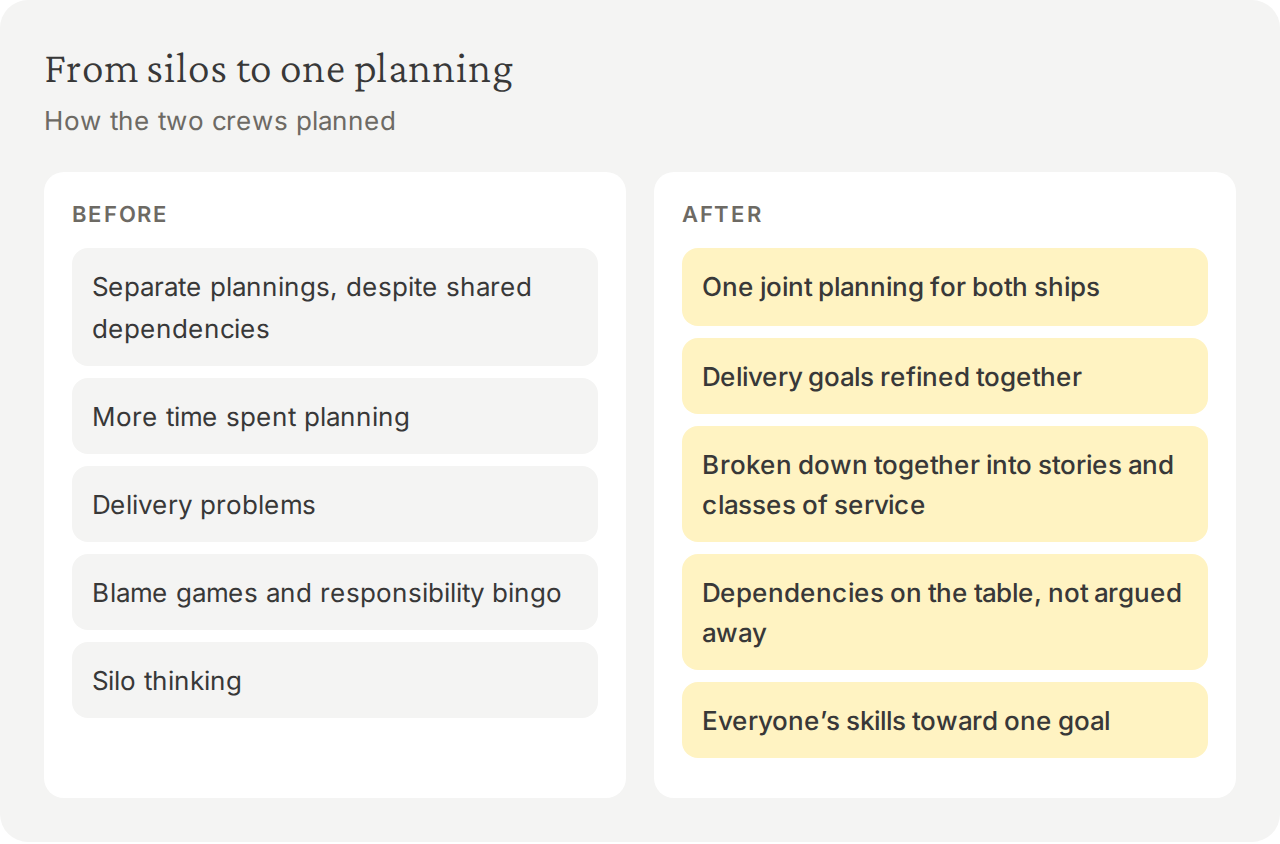
It didn't matter who was on which ship:
everyone brought their skills to reach the same goal.
Acceptance gates stopped the wrong work before it was built, and just-in-time refinement replaced long sessions with short huddles.
A new sailor aboard?
Both ships sailed before AI, and they reached port without it. Nothing on this voyage needed AI. Structure, transparency and planning together did the heavy lifting.
But with a new sailor aboard, every point about time would drop even further. Requirements engineering with agents turns refinement from hours into minutes: the agent knows each ship’s backlog structure, pre-fills drafts, checks them for gaps and documents the conversation in the right shape.
AI doesn't change the course. It gives the crew back the time to steer it.