To Be or Not to Be...Agile
The first conversation almost always goes the same way. A company reaches out. Someone in leadership has decided that things need to change. And that's great, really! Anyone who reaches out for help shall be heard. But then comes the sentence, almost word for word every time: "We want to be agile."
The obvious follow-up: "Why agile? What problem are you trying to solve?"
And the answer is not always, but most often: "well, it was decided in upper management." Or something vague about speed. Or innovation. Or "because that's what modern companies do."
Not once, in years of coaching, has that first call started with: "Our work culture is broken. People are leaving. The way we work together doesn't reflect how we want to live. We really want change, have a healthy work culture and we're willing to have a really honest look at ourselves." That would be a dream opening. Instead, it's almost always a label. A solution before the problem has even been addressed. And that's a root issue to look at:
A Prescription Without Diagnosis
Agile, at its core, is a mindset. A culture. A way of thinking about work, about collaboration, about trust. The frameworks, the retros and sprint goals (fixed time boxes, daily check-ins, reflection sessions), those are tools that help the mindset to blossom once it's there. Prescribing the tools without the mindset is like prescribing medication without a diagnosis. No doctor would (hopefully) do that. But organizations do it all the time.
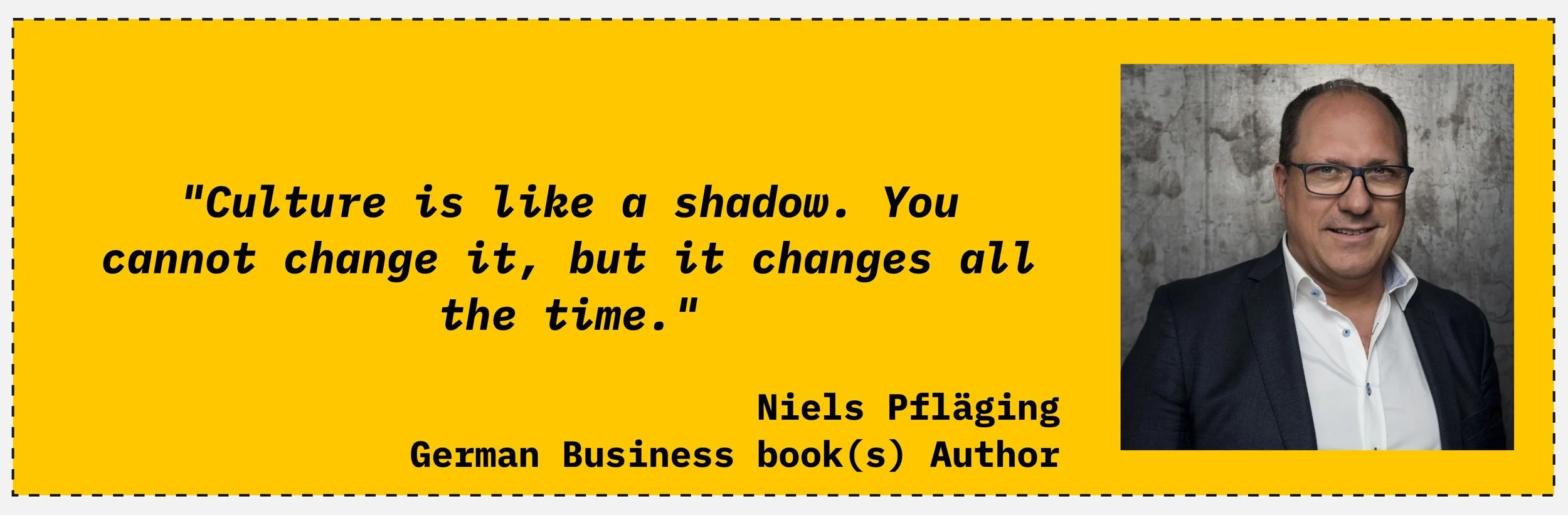
And most of the time, hope is in the room too. Hope that installing the tools will eventually create the mindset. That if you arrange the furniture of agile neatly enough, boards and columns and ceremonies on calendars, the shadow will somehow change shape without anyone touching the thing that casts it.
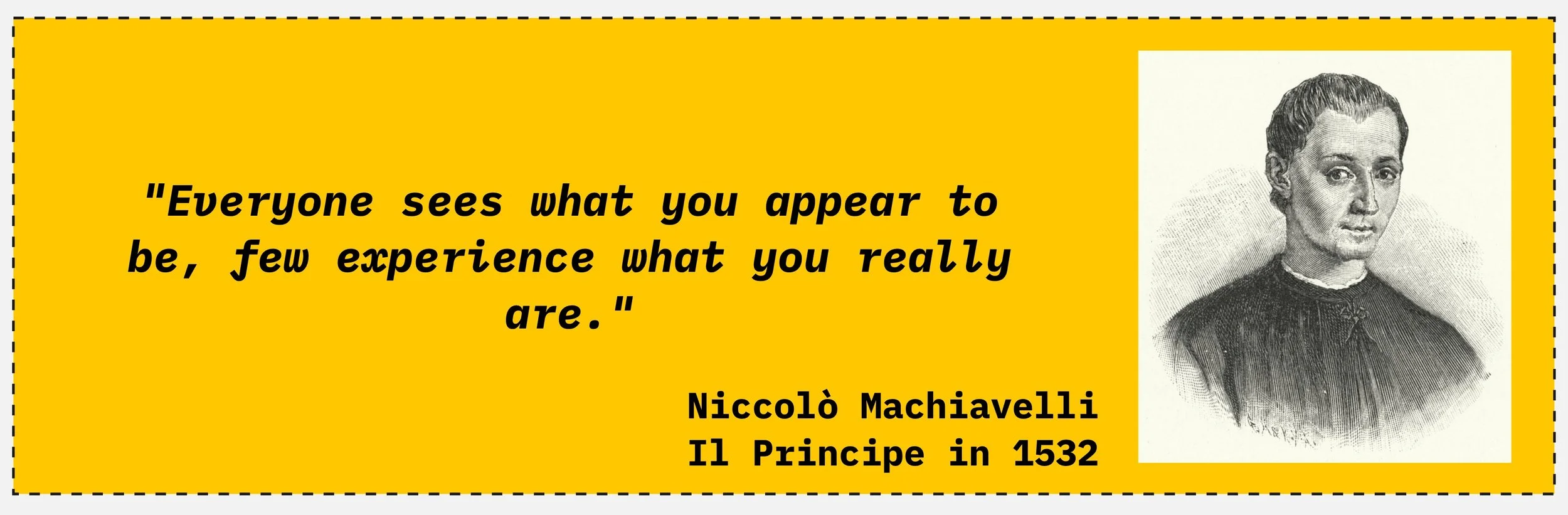
The approach it backwards, really. Putting on the mask, hoping that wearing it long enough will turn you into the thing you're pretending to be.
Perfect Fitting Mask
It's easy to call this out. Harder to understand why it keeps happening.
The truth is: the mask is comfortable. Implementing a framework is tangible. You can put it on a roadmap, assign a budget, hire for it. There's a difference between hiring a Scrum Master (someone who implements Scrum) and hiring an Agile Coach (someone who might question whether Scrum is even the right answer). The first is a task. The second is a conversation most organizations aren't ready for.
And the system rewards the task. Teams get reshaped to fit the framework without anyone checking whether the framework's actual requirements were understood. A team of fifteen gets split into smaller “teams” because Scrum says ten or fewer. But Scrum also says teams should be cross-functional (able to deliver end-to-end without depending on people outside the team). That part gets quietly ignored because it's harder. So the teams get small, but they can't deliver anything alone. The rule was implemented. The purpose behind it wasn't.
Sometimes it's even worse: people get grouped into "teams" who don't actually needeach other's work to deliver. They're told to collaborate, then criticized when the collaboration feels forced. The framework says they should be a team. The work says otherwise. Nobody asks which one is wrong.
Organizations that clearly need a scaled approach (a way to coordinate multiple teams working on the same product) can't see their own structure clearly enough to realize it. The forest-for-the-trees problem, except the trees are org charts and the forest is the actual way work flows.
There's a concept from 1969 that explains part of this: Laurence J. Peter called it the Peter Principle: in a hierarchy, people tend to rise to their level of incompetence. The best engineer becomes a team lead. The best team lead becomes a manager. Not because they're good at leading or managing, but because they were good at the thing before. The system confuses expertise with leadership, and then protects the resulting structure from questioning. The hierarchy becomes self-reinforcing: the people in charge of changing the system are the ones the system was built to protect.
That's exactly why one of the first things agile does is redistribute power. Not remove it. Move it to where the information lives, where the work happens. Flatten the formal hierarchy so that decisions can be made by the people closest to the problem. The frameworks try to encode this: the team owns the how, the Product Owner owns the what, nobody owns the people.
But removing the formal hierarchy doesn't remove the informal one. The CEO who still dictates the backlog. The manager who approves every decision behind closed doors. The structure stays intact, it just stops being visible on the org chart. You can't grow transparency and shared ownership while the shadow hierarchy keeps running the show.
That's not a framework problem. That's a power problem. And frameworks don't solve power problems. If anything, they make them more visible, which is exactly why the masquerade is so attractive. Keep the ceremonies, keep the titles, keep the structure. Just call it agile.
Gallup's global workplace research (the largest ongoing study on employee engagement) has been saying it for years: 70% of the variance in team engagement comes down to the manager. People don't leave companies, they leave managers/their boss. And yet the conversation about agile transformation rarely touches the one variable that determines whether teams can actually be agile:
the quality of the relationship between the people doing the work and the people directing it.
This is where "doing agile" and "being agile" are two completely different things. Doing is the framework. Being is the culture. And culture doesn't get installed. It gets grown, protected, and fought for. So, companies have the culture they deserve.
A Historical Pattern
This isn't the first masquerade dance and it won't be the last. The pattern is older and wider than agile.
Digitalization, in many organizations, meant making analog processes digital. Print a form, fill it out by hand, scan it, email the scan. The process stayed the same. It just had a screen now. Agility meant wanting change without changing anything. New labels, same culture. A fruit basket in the kitchen and a foosball table in the hallway. The German idiom captures it perfectly: Wash/Clean me, but don't get me wet!
And now... AI. Roughly 60% of knowledge workers reportedly use AI tools already, officially or not. Which means the machines are already at the ball. They're already dancing. And everyone knows it. But the organization never officially sent the invitation, so the culture looks the other way. People use AI behind closed doors, know exactly who's behind the mask, and say nothing. The most toxic kind of silence: pretending not to see what's obviously in the room.
How many machines are already behind masks at your company's masquerade?
But the number of organizations that are genuinely successful with AI is vanishingly small. Because most of them are doing the same thing again: implementing AI into workflows that were broken before AI even arrived. A bad workflow doesn't get better because it runs faster. It just produces bad results at scale.
The latest version looks like this: someone asks ChatGPT "how can we improve our company?", gets a beautifully structured answer full of validation, and walks away thinking "see, we're on the right track." No second opinion. No uncomfortable follow-up question. Just a machine telling you what you want to hear, wearing the mask of insight.
An Uninvited Guest
AI is entering that ballroom. And AI is wearing its own mask.
Half human, half machine. It speaks in full sentences. It sounds empathetic. It generates retrospective feedback, sprint summaries, and conflict-resolution suggestions without ever having sat in the room where it got quiet. It wears the mask of understanding without understandinganything.
Semantic drift, the slow erosion of meaning that happens when AI builds on its own output without a human correcting course, already showed that AI works best when it gets structured input, minimal waste, and clearly defined workflows. That's Lean (the discipline of eliminating waste and delivering only what's needed, when it's needed), not Agile. The execution part of building, the "doing," is increasingly handled by machines. That's not "individuals and interactions over processes and tools." That's the opposite: processes and tools, optimized to the point where individuals become optional for the execution layer.
So now there are two masks in the room. The organization pretending to be agile. And the machine pretending to be human. And for the first time, the two masks are looking at each other. One built on control and process and calling it culture. The other built on pattern-matching it calls understanding. Together, they're the perfect masquerade: an organization that never learned to be agile, using a tool that never will be.
And here's where it splits into two very different futures.
Two First Violins
Organizations that never invested in the "being," in the culture, in the values, will do the obvious thing: use AI to replace the humans they never valued in the first place. The ceremonies get automated. The ticket management gets automated. The standup facilitation, the backlog refinement (reviewing and preparing upcoming work), the velocity tracking (measuring how much a team delivers per cycle). AI can do all of it. Cheaper, faster, and it doesn't need a computer science degree to facilitate a planning session of a new complex product.
The masquerade becomes more efficient. But not more honest. The culture that was already cold just gets colder at scale. People become optional. Not because AI made them optional, but because the organization never figured out what made them essential.
And then there are the organizations that did the uncomfortable work. The ones that actually grew a culture of trust, transparency, and shared ownership. Where someone can say "that requirement doesn't make sense" in front of their lead and not fear a bad consequence. Where a team can sit with a problem they can't articulate yet, and someone holds the space for that.
Those organizations will use AI very, very differently. Not as a replacement but as an amplifier. Because the human part, the asking "why are we building this?" before the first prompt, the "no, wait, that's not what the user needs" when everything else says yes, that's exactly the half of the mask that AI leaves open. AI handles the execution. The humans handle the meaning. And the agile values, the real ones, are what connect the two.
Save the different Dance
There's a Dutch healthcare organization called Buurtzorg. Thousands of employees, radically self-organized, consistently ranked among the best employers in the Netherlands. They don't use the word agile. They don't have Scrum Masters or sprint boards. They don't talk about frameworks at all (at least, officially).
They just work that way.
There's something almost philosophical about it. The ones who truly understand a thing rarely need to name it. The loudest voices in the agile conversation are often the ones still figuring it out. The ones who got it, who actually built a culture of trust and ownership and human-centered work, they're not at the masquerade. They never needed the costume.
Every role that defines itself through control, status, or information monopoly is replaceable. That's not a threat. It's a diagnosis. And the diagnosis has been there long before AI arrived. AI just makes it impossible to ignore. But the reverse is also true! Every role that defines itself through trust, through the ability to ask the uncomfortable question, through making others better at what they do, those roles just became more valuable than ever. Not despite AI. Because of it.
So, the question was really never whether agile works. The question is what's underneath the mask. Because every magical masquerade ends. The music stops, the lights come on, and the masks must come off.
What's revealed is either a human, a monster... or a machine.
Feel like taking a look in the mirror without the mask? [ Book a free consultation call ]